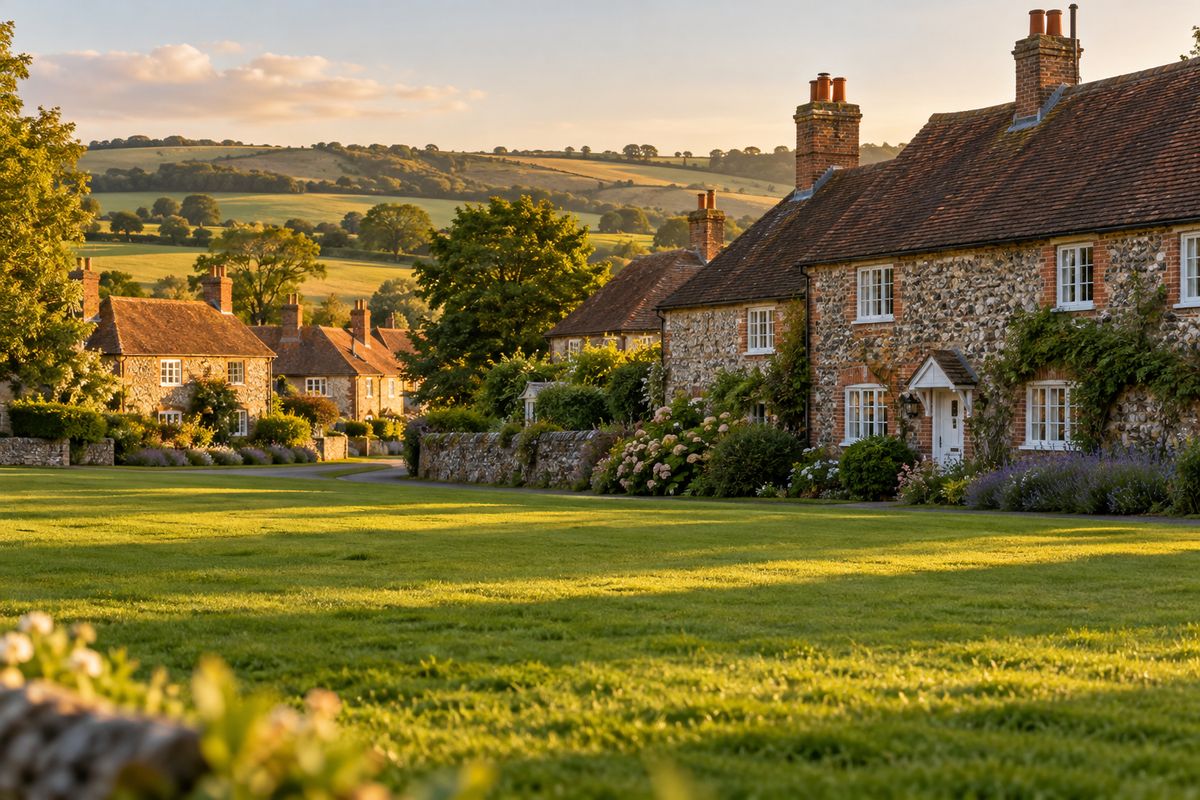
Wingham lies along the A257, the ancient road from Richborough towards London, and the River Wingham runs through the village. Wikipedia describes the river as a short tributary of the Little Stour, rising near Ash at about 12 metres and joining the Little Stour at Wingham at about 4 metres. So Wingham sits low, on the side of a shallow valley, and that shapes what its lawns put up with.
Dover District's landscape assessment says the land dropping towards Wingham is part of the Little Stour marshes. Around Wingham it describes chalky and gravelly river alluvium, with shallow calcareous and non-calcareous loamy soils over flint gravel, affected by groundwater. The assessment is describing the valley floor farmland rather than any one garden, so treat it as a pointer. As general guidance, shallow loam over gravel is free draining in summer, so lawns can brown off quickly in a dry spell, yet the groundwater means the same ground can be soft in a wet winter. Mow a little higher in summer, leave the clippings on during dry spells, and avoid scarifying or heavy rolling when the ground is saturated.
The village centre is a conservation area. Dover District Council's heritage strategy says Wingham High Street Conservation Area was designated in 1969, was among the first in Kent, and contains 72 listed buildings. Wikipedia adds a Grade I church from the early 13th century and a college founded in 1286. Gardens behind and around such buildings are often long, narrow and walled, with older trees and a lot of history under the turf. Compaction from decades of use and root competition from mature trees are common issues in plots like these, and hollow-tine aeration is usually the first remedy to consider.
If your Wingham lawn has lost its shape or is more moss and bare earth than grass, the sensible route is staged. A light scarify comes first to lift moss and thatch, and then lawn restoration if the turf is too thin to recover on its own. Our guide on lawns on East Kent soils explains why chalky, gravelly ground needs more water-holding help than clay does.
Wingham also has newer housing as well as old: Wikipedia mentions Miller Close, a small group of homes built by the Rural Housing Trust. Newer small gardens often have thin topsoil over builders' subsoil, which compacts and drains badly. Aeration and a good topdressing do far more for them than extra feeding.
What we do in Wingham
- Scarifying Lift moss and thatch so water, air and feed reach the roots.
- Hollow-tine aeration Pull out cores to relieve compaction and let the soil drain and breathe.
- Overseeding Put new grass into thin and worn areas.
- Lawn restoration Scarify, aerate, overseed and feed in one planned visit.
- Lawn maintenance Regular mowing and general lawn work between treatments.
Prices are the same everywhere we work. A typical 100 m² lawn is £135 for a Lawn Refresh, £230 for Lawn Recovery and £325 for Lawn Restoration. Pay for the year and save 10%.
Questions
Does living near the Wingham River affect my lawn?
It can. Dover District's assessment describes groundwater-affected, shallow loamy soil over flint gravel on the valley floor around the village. In practice that can mean ground that dries quickly in summer and is soft in winter. Every garden differs, so check how yours behaves after heavy rain before choosing a treatment.
I live in the Wingham conservation area. Do lawn treatments need permission?
Aeration, scarifying, overseeding and mowing are normal garden maintenance and do not alter a building. Conservation area rules mainly cover works to buildings and to trees, so check with Dover District Council before any tree work. If you are unsure, ask the council.
Why does the lawn behind my older Wingham house look thin under the trees?
Mature trees take light and water, and old plots have often been walked on for decades. Aerating, overseeding with a shade mix and mowing a little higher usually helps more than adding fertiliser.