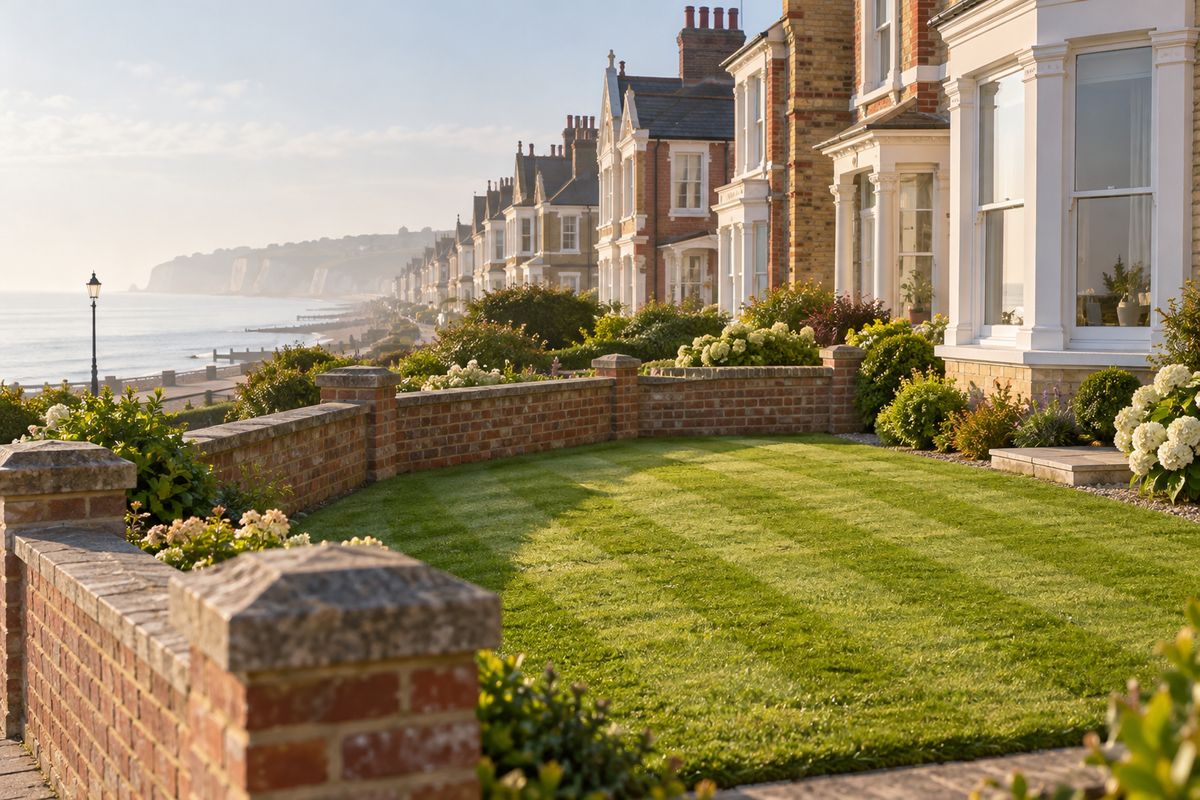
The British Geological Survey memoir for this area states that the old town of Deal was established on the continuation of a storm-gravel shingle barrier, flint shingle thrown up by the sea from the chalk cliffs further south. Gravel like this drains quickly, and in places the topsoil laid over it may be thin. The town also faces the open water where the North Sea and the English Channel meet, so it takes the wind and salt that come with that.
As general guidance, a lawn on a shallow layer over gravel behaves like a sandy one: it dries out fast and shows stress early. Feeding little and often, cutting a bit higher in summer and overseeding each autumn do more for it than heavy treatments. The quick test is practical: dig a spade-deep hole and look at how much dark soil sits above the stones. Heavier ground in other parts of town may need hollow-tine aeration first. Our guide to lawns on East Kent soils explains the contrast.
Deal is also a town of dense history. Dover District Council's assessment counts some 466 listed buildings, and Middle Street was the first conservation area designated in Kent. In older streets the usual lawn problems follow from shade and shelter: walls and neighbouring buildings cut light and air movement, and moss moves in. General guidance: a lawn in that position benefits from regular scarifying to lift moss and thatch, and from a shade-tolerant seed mix when it is thinned.
Upper Deal is different. The conservation area appraisal describes St Leonard's Church standing on raised ground, trees framing views, some larger gardens and a good deal of newer building in the gardens of historic houses. Higher ground generally drains better than the seafront, and larger plots with mature trees mean leaf fall, root competition and dappled shade rather than salt. Trees in conservation areas have legal protection, so check with the council before pruning anything that shades a lawn.
Deal also grew in the twentieth century with the Betteshanger coal mine, and the assessment calls the town today a mixture of old and new. That shows in the gardens: small lawns on older streets, larger and more varied plots further out. If yours has thinned, mossed or gone patchy, lawn restoration is the thorough fix, and the annual plan spreads the work over the year. The autumn timetable shows what happens and when.
What we do in Deal
- Scarifying Lift moss and thatch so water, air and feed reach the roots.
- Hollow-tine aeration Pull out cores to relieve compaction and let the soil drain and breathe.
- Overseeding Put new grass into thin and worn areas.
- Lawn restoration Scarify, aerate, overseed and feed in one planned visit.
- Lawn maintenance Regular mowing and general lawn work between treatments.
Prices are the same everywhere we work. A typical 100 m² lawn is £135 for a Lawn Refresh, £230 for Lawn Recovery and £325 for Lawn Restoration. Pay for the year and save 10%.
Questions
Does shingle under my Deal lawn mean I need to water more?
Possibly. It depends on how much soil sits over the gravel, which varies from street to street. Dig a spade-deep hole to check. A thin layer dries out quickly and benefits from deeper, less frequent watering and autumn overseeding. A deep layer behaves more like ordinary garden soil.
My Upper Deal garden is shaded by mature trees. What can be done?
Shade is a growing condition, not a fault. Raising the cutting height, clearing leaves promptly, scarifying to lift moss and overseeding with a shade-tolerant mix all help. Check the conservation-area rules with the council before any tree work.