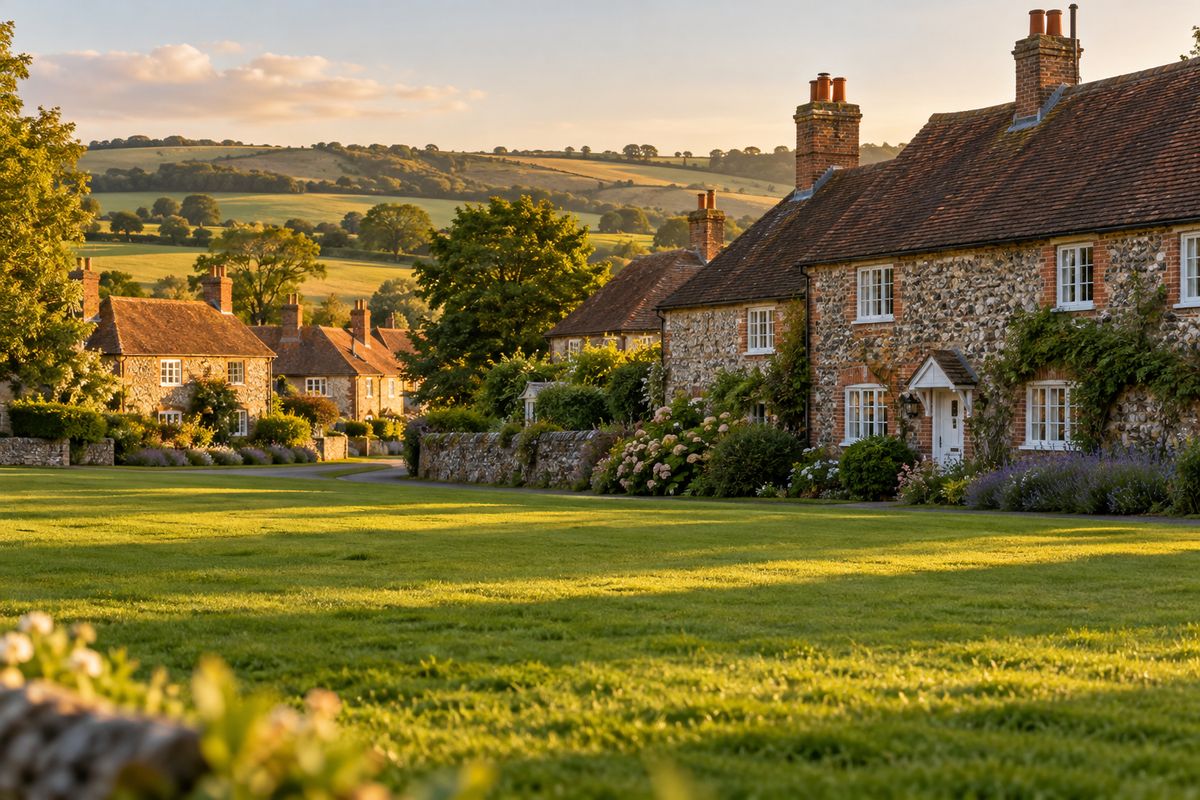
Worth lies about two kilometres south of Sandwich, in a parish of around 1,600 hectares. Wikipedia notes it was supposedly first settled because of its fertile soils, and Dover District's landscape assessment backs up the general picture: it places Worth in the Preston and Ash horticultural belt, with Thanet Beds around Worth and Woodnesborough, and soils that are deep, well drained, often stoneless, fine and silty. Good ground makes for a good lawn when the basics are right, and most of the work in Worth is about drainage, shade and keeping the turf dense rather than about improving the soil itself. Wikipedia adds that cultivation here goes back to the Norman period, under the Lords of Eastry Manor, so these are long-worked fields and gardens.
The assessment also says some of this ground is fine and loamy over slowly permeable subsoil with slight seasonal waterlogging. That combination, a lovely topsoil over a subsoil that drains slowly, explains why some Worth lawns look fine in summer and squelch in January. As general guidance, aerate in autumn with hollow-tine aeration so surface water has somewhere to go, and keep heavy mowing off wet ground. Our guide to lawns on East Kent soils has more on telling which kind you have.
The village has a character of its own. Dover District Council's heritage strategy shows ornate brick gables at Worth making a strong positive contribution to the conservation area, a sign of the Dutch influence in this part of Kent, and Wikipedia says the area was known for its redbrick housing from the 16th century. Gardens around older brick houses are often small and enclosed by walls and hedges, which means sheltered, sometimes shaded turf. If moss is the problem, scarifying in early autumn is usually the right first step, followed by overseeding to fill the gaps.
The 2011 census recorded 992 residents in Worth, and Wikipedia says its 403 households are mostly one or two people. Smaller households often want a lawn that looks good with modest effort. Our annual plan is built for exactly that, and keeps the work spread across the year rather than all in one weekend.
The landscape around Worth is flat to gently undulating, with poplar windbreaks and hedgerows that limit views and give shelter. The assessment notes those windbreaks around the villages of the horticultural belt. Shelter is useful, but it also slows drying after rain, so lawns near hedges and windbreaks are the ones to watch for moss in damp, mild winters.
What we do in Worth
- Scarifying Lift moss and thatch so water, air and feed reach the roots.
- Hollow-tine aeration Pull out cores to relieve compaction and let the soil drain and breathe.
- Overseeding Put new grass into thin and worn areas.
- Lawn restoration Scarify, aerate, overseed and feed in one planned visit.
- Lawn maintenance Regular mowing and general lawn work between treatments.
Prices are the same everywhere we work. A typical 100 m² lawn is £135 for a Lawn Refresh, £230 for Lawn Recovery and £325 for Lawn Restoration. Pay for the year and save 10%.
Questions
Why is my Worth lawn waterlogged in winter when the soil looks good?
Dover District's assessment describes loamy topsoil over slowly permeable subsoil in parts of this belt, which can cause slight seasonal waterlogging. Hollow-tine aeration in autumn and keeping off wet turf are the usual answers.
Does living in the Worth conservation area limit what I can do to my lawn?
Normal lawn care such as mowing, scarifying, aerating and overseeding does not alter a building, so it is not affected. Conservation area controls mainly apply to buildings and trees, so check with Dover District Council before any tree work.
My Worth garden has a lot of hedging. Will that affect the lawn?
Often, yes. Hedges and windbreaks give shelter but also shade and slow drying after rain, and they take water from the nearest strip of turf. A slightly higher cut, an autumn overseed with a shade-tolerant mix and good aeration keep those edges in better shape.