First, the honest picture
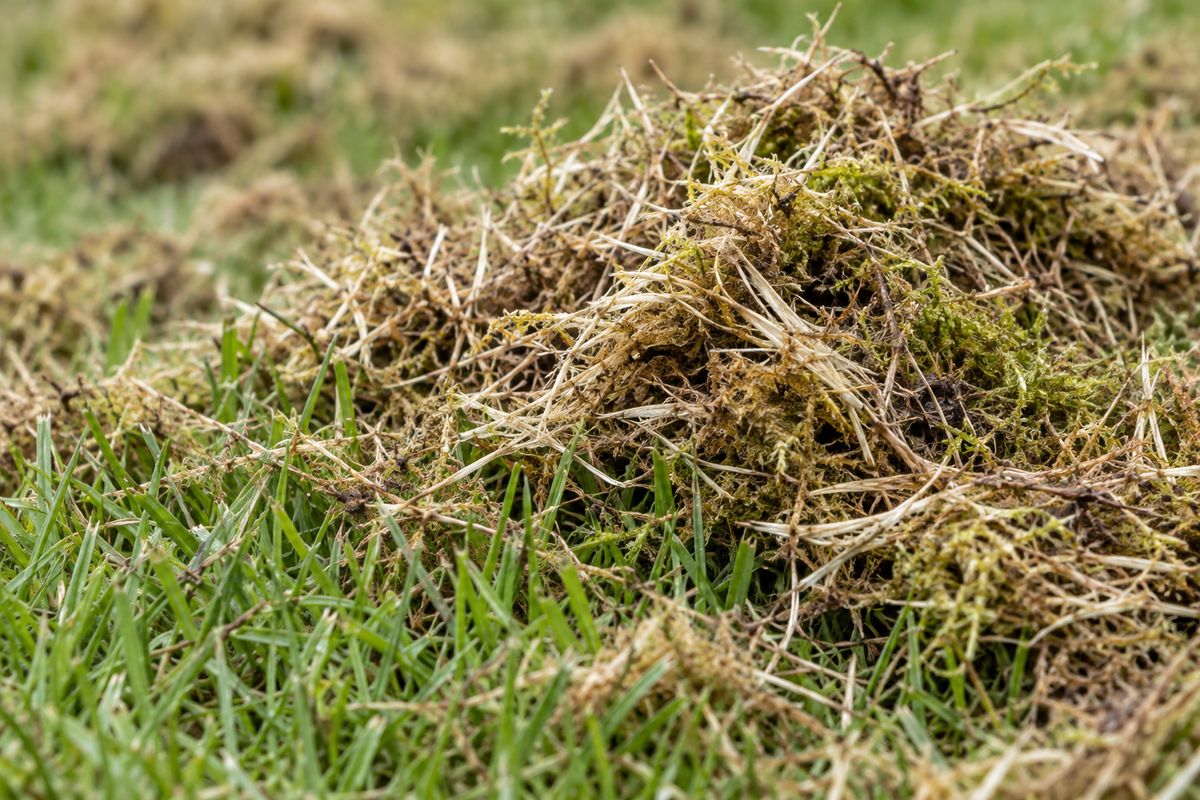
Scarifying pulls a lot out of a lawn. There will be a heap of debris, a thinner and browner surface, and sometimes bare soil showing through. The RHS says the lawn may look patchy and rough afterwards but should recover. Lawnsmith, a commercial lawn-care company, is blunter: heavy raking can leave the lawn an eyesore for weeks, if not months, and recovery is faster in good growing conditions.
That range is the key point. No source gives a fixed number of days, because recovery depends on the season, the weather, the grass and how hard the job was. The timeline below is a typical pattern pinned to the figures we can source, with our own judgement clearly marked where it is not.
Day one: clear up and decide on seed
Rake up and remove the debris. The RHS says the removed thatch can go on the compost heap, and Westland notes that scarifying can leave a large pile, which can go in the green waste bin as well.
Then think about seed. Heavy raking thins the lawn and exposes soil, which Lawnsmith points out makes a seedbed for overseeding. Westland advises applying lawn seed afterwards, and Lawnsmith describes the aftercare as two simple steps: overseed, then feed. Doing it while the soil is open helps the seed make contact. Our guide to overseeding step by step covers rates and method, and always follow the rate on the packet.
A typical recovery timeline
Treat the weeks below as a guide only. They assume an autumn job on a growing lawn, with seed sown straight after.
- Days 1 to 7: the lawn looks rough, with brown thatch residue and thin cover. Keep the surface moist if seed is down. Water gently, as the RHS advises for repairs, so the seed is not washed out.
- Weeks 1 to 2: seedlings should start to appear. The RHS says seed sown for a lawn should germinate in seven to ten days, though that figure is from its guidance on starting a lawn from seed, and cool autumn weather can slow it. Existing grass starts to knit together.
- Weeks 2 to 4: green cover begins to fill in. The RHS says new seed and turf dry out easily until well rooted, so water regularly if rain is lacking.
- Weeks 4 to 8: the first cuts happen and the lawn thickens. Moss and weeds have less room, which is the point.
- Into winter and spring: growth slows as it cools. Many lawns look their best the following spring, which is general guidance rather than a sourced rule.
Aftercare: water, feed, mow, keep off
Each of these steps matters, and each has a rule worth knowing.
- Watering. Keep seeded areas evenly damp, and water gently with a fine rose or spray. The RHS says to water seed regularly if it does not rain. Clemson, a US source, advises watering thoroughly after dethatching so exposed roots do not dry out.
- Feeding. The RHS says most lawns recover from summer wear without feeding, and if you do feed in autumn, use an autumn lawn feed, the minimum needed, applied just before forecast rain at the packet rate. Water it in if there is no rain within a day or so. Clemson feeds a week after dethatching, but that is advice for southern US lawns.
- Mowing. For new seedlings, the RHS says to cut once they are 5 to 7.5cm tall, removing about one-third of their height, with sharp blades. Its mowing guide adds that you should never take off more than a third in one cut and should avoid mowing wet or soft grass. See how high to mow through the year.
- Traffic. The RHS says a lawn sown from seed should be used as little as possible for about eight months. A scarified and overseeded lawn is not brand new, so that is a ceiling rather than a rule, but it shows why we would keep paws, football and heavy foot traffic off until the seedlings have been cut a couple of times.
- Weedkiller and moss killer. Lawnsmith says to avoid weedkiller for a few weeks before scarifying, since it can disrupt germination if you plan to overseed. Hold off on both while seed is germinating.
What is normal, and when to worry
Normal: a brown, ragged surface for the first couple of weeks, thin patches that fill gradually, and a heap of debris. These are all expected, as the RHS and Lawnsmith both say.
Worth checking: patches that stay thin after several weeks of growing weather, patches that go from dark green to brown and do not recover with rain, and anything with white or fungal growth. The RHS dry patch page says dry patches do not improve with rain or watering and that the soil beneath is bone-dry. Treat that as a different problem from slow recovery. The RHS also says fungal diseases can flourish on warm, damp autumn days, and names red thread, fusarium patch, take-all patch, lawn rust and fairy rings as the ones to watch for.
If moss is back within weeks, it is usually telling you the cause has not been fixed. Our moss guide covers the usual culprits.
Planning the rest of the year
Scarifying is one job in a sequence. Aeration, overseeding and sensible feeding all work together, and the autumn lawn restoration timetable shows the order. If you would like it all done for you, our scarifying service is the place to start, and the annual plan keeps the lawn on track afterwards.
Questions
How long does a lawn take to recover after scarifying?
It depends on the season and weather. The RHS says a scarified lawn may look patchy and rough but should recover, and Lawnsmith says heavy work can leave it looking poor for weeks, if not months. Recovery is faster in good growing conditions.
Do I have to overseed after scarifying?
Not always, but it often helps. Heavy raking exposes soil that moss and weeds would otherwise fill. Lawnsmith describes overseeding and feeding as the two steps for recovery. See our overseeding guide.
When can I mow after scarifying?
For newly sown seedlings, the RHS says to wait until they are 5 to 7.5cm tall, then take off about a third. Use sharp blades and do not mow when the grass is wet.
Is it normal for the lawn to look worse?
Yes. Both the RHS and Lawnsmith say scarified lawns look rough at first. Patchy cover for a couple of weeks is expected, but see our notes above on what needs checking.
Sources
- RHS: Lawn care in autumn, Lawn may look patchy and rough but should recover, compost the thatch, autumn feed advice, fungal diseases to watch
- RHS: Starting a lawn from seed, Germination 7 to 10 days, first cut at 5 to 7.5cm removing a third, about eight months light use
- RHS: Repairing lawns, Water gently with a fine rose, new seed dries out until rooted
- RHS: Mowing lawns, Never remove more than a third, avoid mowing wet or soft grass
- RHS: Lawn dry patch, Dry patch symptoms: no response to rain, bone-dry soil
- Lawnsmith: When is the best time to rake or scarify the lawn?, Heavy work can leave an eyesore for weeks if not months, faster in good growing conditions, weedkiller timing
- Lawnsmith: Scarifying and raking the lawn for moss and thatch, Aftercare as two steps, overseed then feed, gentle repeated passes
- Westland Garden Health: Scarifying your lawn, Large pile of debris, apply seed afterwards
- Clemson HGIC: Controlling thatch in lawns, Water thoroughly after dethatching, feed a week later (US source)