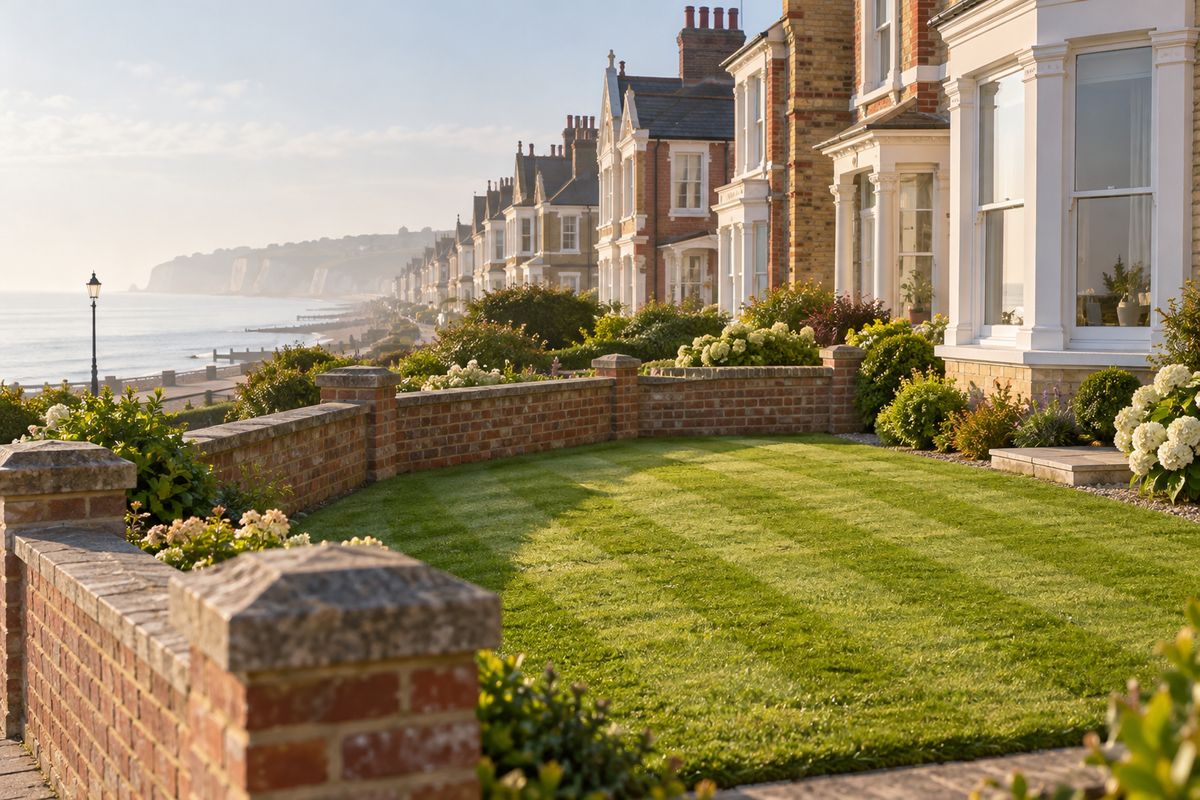
Start with the weather. Wikipedia lists Margate as one of the driest towns in Kent, with around 613 mm of rain a year and about 1,846 hours of sunshine. For a lawn, low rainfall plus a lot of sun means summer stress comes first and everything else second. General guidance: cut no shorter than about 3 to 4 cm in summer, leave the clippings on in dry weather, and do the heavy work, scarifying and seeding, in early autumn when moisture comes back. Our how to overseed guide sets out the sequence. Dry weather also hides problems: a lawn that looks green in April can turn straw-coloured within weeks if its roots are shallow, and frequent light watering keeps roots shallow. If you water at all, a deep soak once a week in the evening trains them downwards.
Underneath, Margate is chalk. Wikipedia says the cliffs of the Isle of Thanet are composed of chalk, and the island's soil has long supported arable farming. Chalky soil drains fast, so a lawn that scorches by July is behaving normally for the ground it is on. Regular hollow-tine aeration helps rain soak in rather than run off a baked surface, and our guide to lawns on East Kent soils explains the soil types you may meet.
Housing varies by neighbourhood. West Cliftonville was first developed as a high-end seaside resort and was known as the fashionable hotel quarter of Margate, while the Palm Bay estate in Cliftonville was built in the 1930s with wide avenues, detached and semi-detached houses, driveways, garages and gardens. Interwar plots like those usually have a front lawn and a longer back lawn, and the front one often takes the most wear from cars, bins and foot traffic. As general guidance, a worn front lawn needs overseeding once the compaction is relieved, not just more seed on hard ground.
The town has public lawns too: the Oval Lawns in Cliftonville cover over four acres. If your own lawn has gone yellow and patchy after a hot summer, lawn restoration repairs it in one visit, and the annual plan spreads the work across the year. We work in Margate and the neighbouring Thanet towns; send an address and a photo of the lawn to get started, and we will say honestly whether it needs a full restoration or just a seasonal tidy-up.
What we do in Margate
- Scarifying Lift moss and thatch so water, air and feed reach the roots.
- Hollow-tine aeration Pull out cores to relieve compaction and let the soil drain and breathe.
- Overseeding Put new grass into thin and worn areas.
- Lawn restoration Scarify, aerate, overseed and feed in one planned visit.
- Lawn maintenance Regular mowing and general lawn work between treatments.
Prices are the same everywhere we work. A typical 100 m² lawn is £135 for a Lawn Refresh, £230 for Lawn Recovery and £325 for Lawn Restoration. Pay for the year and save 10%.
Questions
Why does my Margate lawn go brown every summer?
Margate is one of the driest and sunniest towns in Kent and sits on chalk, which drains freely. Browning in July and August is common, and healthy grass usually recovers when the rain returns. Mowing higher helps.
When is the best time to repair a lawn in Margate?
Early autumn is generally best: the soil is still warm and the rain returns. Spring is the second window, though a dry May can undo new seed.
Do you cover Cliftonville and Garlinge?
Yes, we cover Cliftonville, Westbrook and Garlinge as well as the rest of Margate.