Ask whether the lawn needs it first
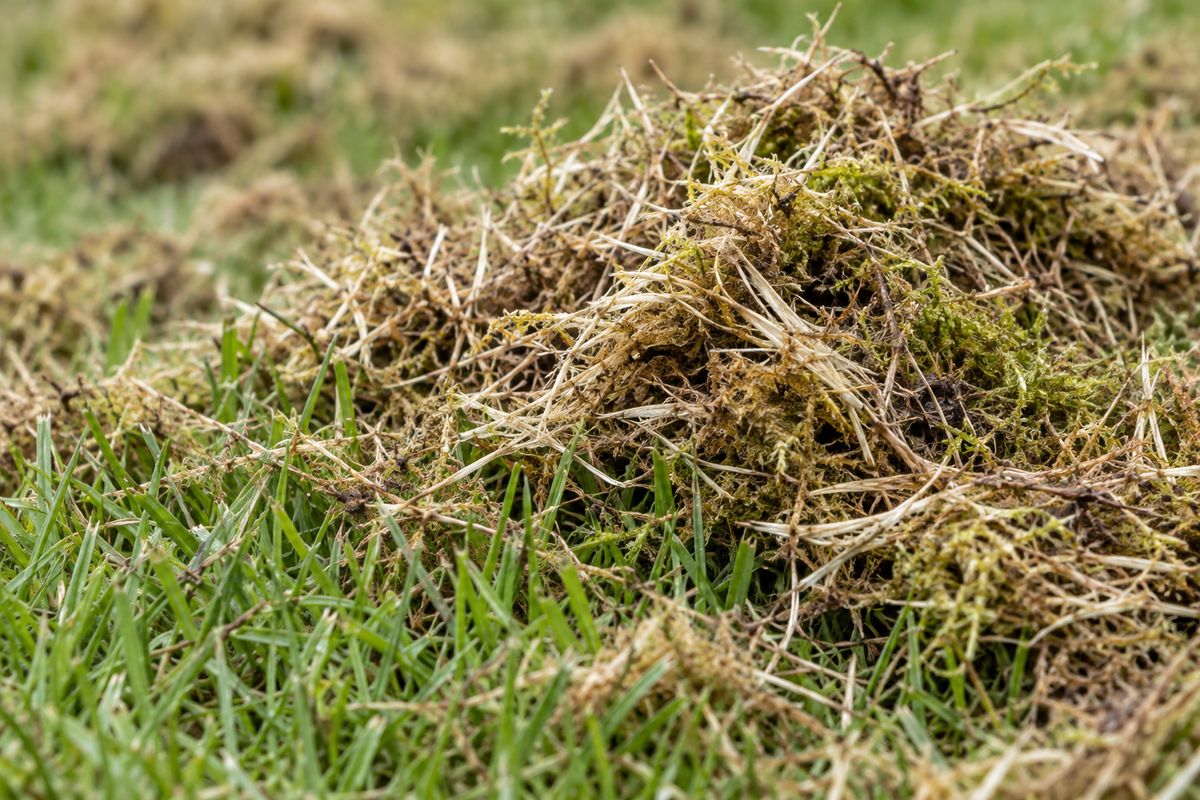
Scarifying rakes out thatch and moss from the base of the grass. It is not a yearly ritual that every lawn must have, and the RHS says as much: its autumn guide notes that the lawn tasks do not all need doing every year, so you can pick one or two.
The RHS gives a simple test. If you cannot see soil between the blades of grass, the lawn would benefit from scarifying. Walk on it, too. A lawn that feels spongy underfoot, or that has visible moss, is a likely candidate. Westland, a lawn-product company, says thatch thicker than 1cm can block water and feed from reaching the roots. Our guide to measuring thatch shows how to check the depth yourself in a couple of minutes.
If the lawn is thin because of shade, wear or poor feeding rather than a thick mat of debris, scarifying will not fix it. It can make things worse by thinning the grass further.
The autumn window: September to early November
For most lawns, autumn is the main window. The RHS gives September and October as the time, because early autumn is mild and damp, and it says the same conditions suit lawn work generally. For moss in particular, the RHS moss page says to scarify in October or early November while the grass is growing strongly.
Lawnsmith, a commercial lawn-care company, puts heavy scarifying and raking in August or September. The two sources overlap but do not match, and the sensible reading is that the date matters less than the conditions. You want soil that is still warm, moisture in the ground and grass that is still putting on growth, so it can fill the gaps before winter.
- The grass is growing and the soil is neither baked nor sodden.
- You can follow the work with overseeding while the soil is still warm.
- Autumn scarifying also helps limit moss over winter, according to Westland, so it is less of a problem in spring.
The spring window: April, with caveats
Spring works, but it is the second choice. Lawnsmith says light de-thatching, scarifying or moss removal can be done in spring, which it takes to mean sometime in April. It says heavy work should stay in autumn because spring raking can bring up weed seeds. Westland says scarifying early in the season creates space for the grass to thicken up, and the RHS spring guide lists spring as a good time to rake moss out.
Use spring when you missed autumn, or for shaded areas and ground under trees. Lawnsmith suggests late March through April for those, and advises against putting the job off until the following autumn if the lawn needs help now.
What Kent's climate changes
National advice is written for the whole of Britain, so it helps to look at local averages. The Met Office publishes long-term figures for Faversham in north Kent (1991-2020). They are averages, and any single year can differ, but they show a pattern worth planning around.
From March to July, no month at that station averages more than about 50mm of rain, and March is the lowest at roughly 39mm. By contrast, September averages about 55mm and October about 80mm. A spring scarify can therefore leave you nursing a recovering lawn through a dry run, while an October job is more likely to be helped by rain.
Frost is the other factor. Faversham averages about 4 days of air frost in March and about 1.6 in April, against roughly 0.5 in October. Thin, freshly raked turf is more exposed to a late frost in early spring than to an early one in autumn. These figures describe one north Kent station, not every garden in the county, and a sheltered town lawn behaves differently from an open, exposed one.
When not to scarify
The conditions to avoid matter as much as the season. Lawnsmith's list is a good one, and it matches what we would tell any homeowner:
- Drought, heat or cold. Wait for warmth and some rain.
- Soil that is soft and waterlogged, or hard and dry. Wait for conditions to improve, or skip the job.
- Dew, long grass or damp grass. Rake on a dry day.
- A lawn that is not growing well beforehand, because it will not recover well afterwards.
- Weedkiller applied in the last few weeks. Lawnsmith says it can disrupt the weed-killing process and affect germination of any seed you sow afterwards.
New lawns and mossy lawns: two special cases
A lawn laid from seed or turf this year should generally be left alone. This is general guidance rather than a quoted rule, but the logic is plain: there is no thatch to speak of, and the roots are shallow. The RHS says to use a lawn sown from seed as little as possible for about eight months, which gives an idea of how delicate young turf is.
If there is a lot of living moss, Westland advises treating it before scarifying, since living moss can spread spores when disturbed. Our moss guide covers the causes, because raking alone rarely holds.
A quick decision check
Put it together like this. Scarify if the lawn shows thatch or moss, it is growing, the ground is moist but not wet, and you can seed and feed afterwards. Do it in September or October if you can, and in April only if you must. Otherwise, wait, or choose a gentler job such as aeration. If you would rather have someone read the lawn for you, our scarifying service starts with exactly that assessment.
Questions
Is it better to scarify in spring or autumn?
Autumn for most lawns. The RHS points to September and October, and heavy work is best kept for then. Spring is fine for a lighter job, generally in April, if the grass is growing.
Can I scarify a wet lawn?
It is best not to. Lawnsmith advises against working soil that is too wet or too dry, and a lawn that is waterlogged recovers slowly. Wait for a dry day with the soil moist but firm.
How often should a lawn be scarified?
Only when it needs it. The RHS says autumn lawn jobs need not all be done every year. Check for thatch and moss first, and see our thatch guide before deciding.
Sources
- RHS: Lawn care in autumn, No-soil-visible test, September and October window, jobs not needed every year
- RHS: Moss in lawns, October or early November for moss, grass growing strongly
- RHS: Lawn care in spring and summer, Spring is a good time to rake moss out
- RHS: Starting a lawn from seed, Use a seed-sown lawn sparingly for about eight months
- Lawnsmith: When is the best time to rake or scarify the lawn?, April and autumn windows, heavy work in autumn, conditions to avoid
- Westland Garden Health: Scarifying your lawn, Spring and autumn rationale, thatch over 1cm, treat moss first
- Met Office: Faversham long-term averages, 1991-2020, Faversham 1991-2020 rainfall and air-frost averages